ACLU Back-to-School Bookshelf: Our Reading List to Build a More Perfect Union


For nearly a century, the ACLU has defended the freedom to read—and to think—for every American. As the new school year begins, we’ve curated a list of books that do more than inform; they challenge us to build a more equitable future. Our selection spans social justice, history, contemporary analysis, and personal narratives, including frequently banned titles with newfound relevance.
Since 2021, thousands of book titles have been challenged or removed from school libraries, often targeting BIPOC authors, LGBTQ+ creators, and other marginalized voices. These efforts to ban books and restrict discussions—especially on race, gender, sexuality, and systemic injustice—are both unlawful and a serious threat to our right to learn.
The ACLU and our partners are fighting back. We’re challenging censorship in military schools, and in classrooms across the country. We’re also supporting legislative solutions like the Fight Book Bans Act, which would provide funding to school districts defending against censorship attempts and reaffirm that banning books is discriminatory and unconstitutional.
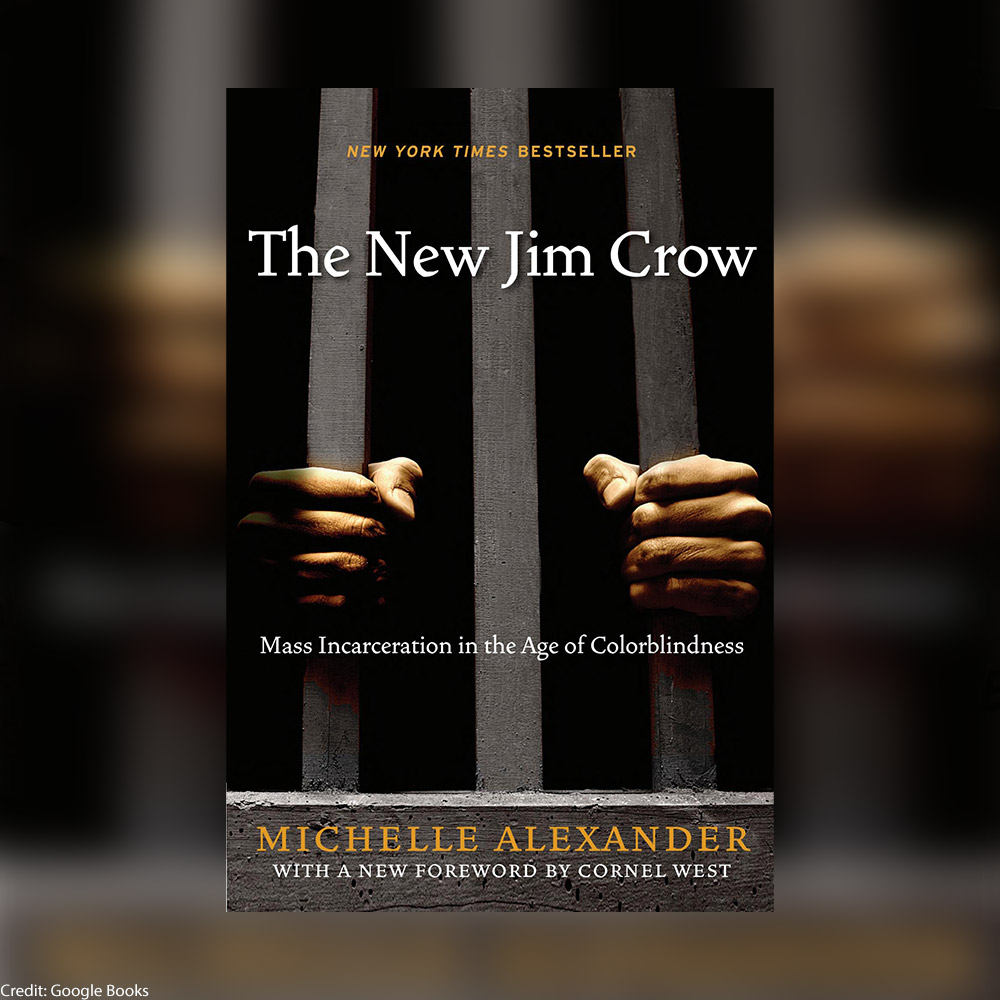
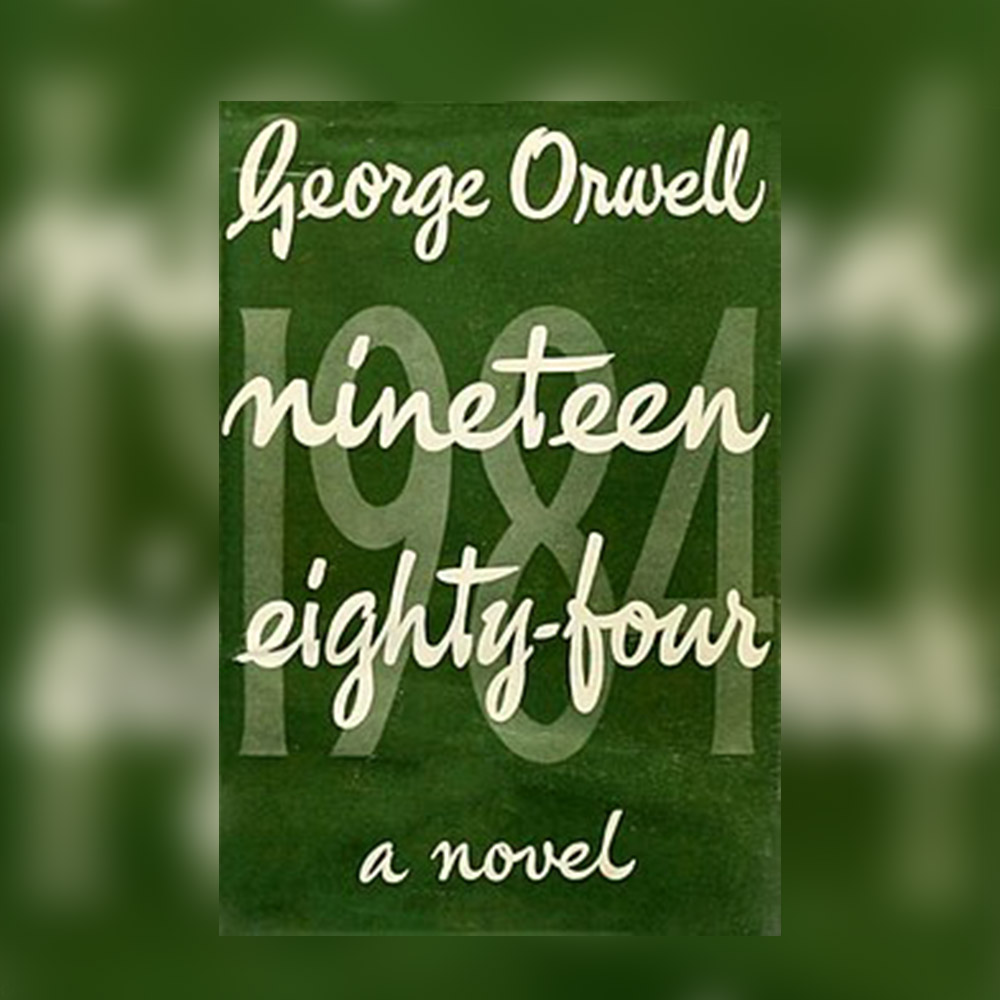
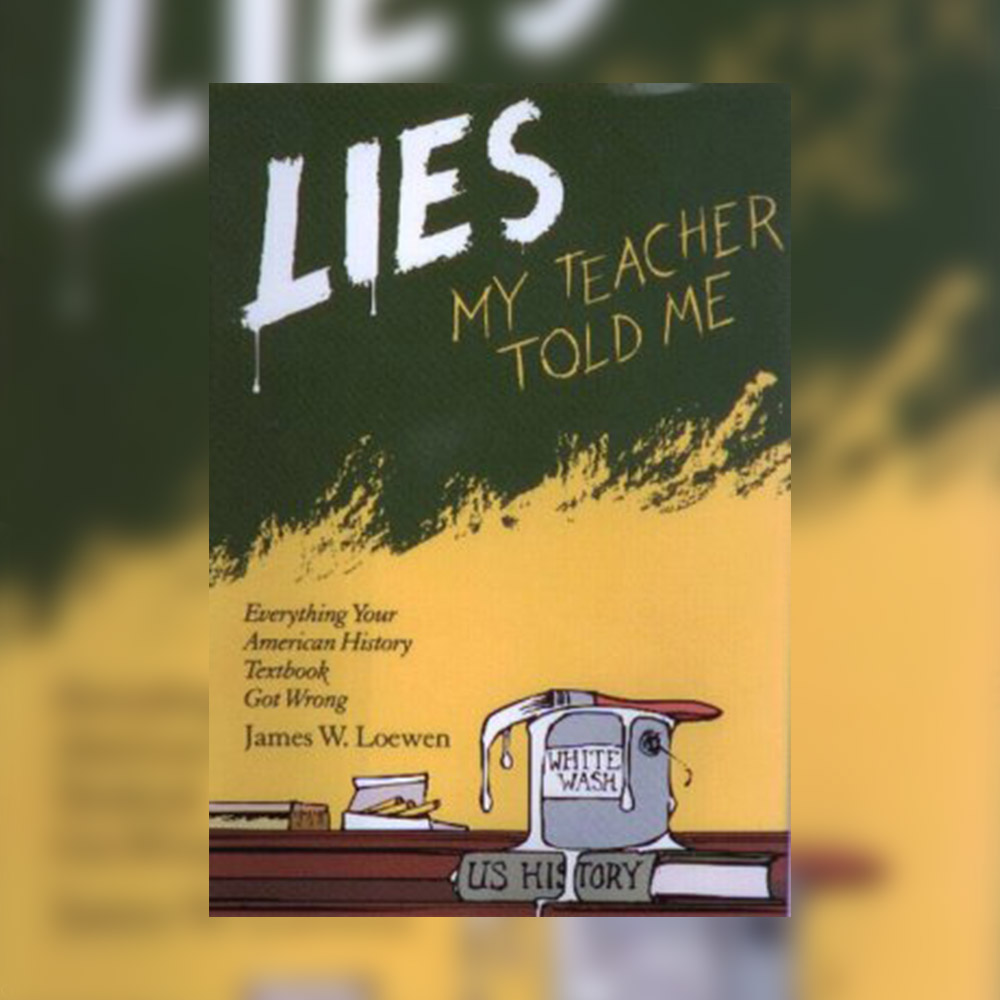
Our series, “ACLU Reads,” lets you join our fight and pick up the texts, novels, nonfiction stories, essays and more that help us form a more perfect union — one page at a time.
So you want to read...

Learn More About the Issues on This Page
-
Press ReleaseOct 2025

Free Speech
LGBTQ Rights
Journalists Argue Against Puerto Rico's Covid-era “fake News” Law In Federal Appeals Court. Explore Press Release.Journalists Argue Against Puerto Rico's COVID-era “Fake News” Law in Federal Appeals Court
SAN JUAN, Puerto Rico — At a time when the freedom of the press is in growing peril, the U.S. Court of Appeals for the First Circuit heard arguments about Puerto Rico’s “fake news” law, which was struck down by a federal district judge in 2023 for violating the First Amendment. Two journalists challenged the law, saying it chilled their reporting and could endanger any journalism during an emergency that may reflect poorly on the government. “If recent attacks on the freedom of the press have taught us anything, it is that the government cannot be allowed to make themselves the arbiter of public debate,” said Brian Hauss, senior staff attorney with the ACLU’s Speech, Privacy, and Technology Project. “Prohibiting ‘fake news’ during an emergency gives the government far too much power to chill and criminalize reporting that they don’t like, and it threatens the foundational principle of our Constitution: a free people requires a free press.” The 2020 Puerto Rico law made it a crime to knowingly raise a “false alarm” about impending catastrophes or knowingly convey false information on any topic when doing so results in an imminent risk to safety, health, property; those found in violation of the law could face up to three years in jail and a fine of up to $5,000. “This is a law created to try to control speech and eliminate any dissent, under the threat of criminally prosecuting people who say something the government disagrees with,” said Fermín Arraiza-Navas, legal director of the ACLU of Puerto Rico. “With this law, the government of Puerto Rico endangers the right to freedom of expression and freedom of the press, especially at a time when we know that freedom of expression is being attacked from multiple angles. This is also an attempt to discourage fair and necessary oversight of the government—precisely during times of emergency. Puerto Rico has plenty of examples showing how, in moments of crisis, the government has failed to provide the public with truthful information, and instead, it has been thanks to journalists and the public that the correct information about these matters has come to light.” Originally filed during the COVID-19 public health crisis, the American Civil Liberties Union and the ACLU of Puerto Rico filed the lawsuit on behalf of two journalists, Sandra Rodríguez Cotto and Rafelli González Cotto, who feared that the laws would be used to punish them for their reporting on public emergencies, especially reporting that reflects negatively on the government. On March 31, 2023, the U.S. District Court for the District of Puerto Rico permanently enjoined the law, holding that it violates the First Amendment because it imposes a content-based restriction on protected speech without adequate justification. The court observed that the statute’s exceedingly broad sweep risked politicized prosecutions and chilling protected speech on matters of public concern. As the court put it, “[t]he watchdog function of speech is never more vital than during a large-scale crisis.” For more information about the case, see here. -
Press ReleaseOct 2025
Free Speech
Court Officials Can’t Hide Secret Directives To Judges On How To Interpret Laws, Ny’s Highest Court Says. Explore Press Release.Court Officials Can’t Hide Secret Directives to Judges on How to Interpret Laws, NY’s Highest Court Says
NEW YORK – In a landmark victory for judicial transparency, the New York State Court of Appeals reversed an Appellate Court decision in NYCLU v. New York State Office of Court Administration (OCA) yesterday, ruling that the administrative arm of the New York State court system, OCA, cannot blanketly shield its guidance to judges concerning how to interpret the law. As shown by the leaked 2021 Crawford Memorandum, it is believed that these directives play a role in how pressing issues are determined by state court judges. The New York Civil Liberties Union and American Civil Liberties Union have been fighting for these records for four years. “This ruling is an unequivocal vindication of the public’s right to understand the workings of our judicial system,” Daniel Lambright, supervising attorney with the New York Civil Liberties Union. “Every day, judges make decisions that have enormous impact on the rights and lives of New Yorkers, especially vulnerable communities. With so much at stake, New Yorkers deserve to know the influences behind judge decision making — and we’re gratified that the state's highest court agrees. Our judicial system is strongest when it is transparent and accountable to the public.” “The public has a right to know when the government urges judges to adopt its preferred interpretations of the law,” said Terry Ding, staff attorney with the ACLU's State Supreme Court Initiative. “That is true whether those communications take the form of legal briefs filed by government agencies in litigation or legal memos from court administrators. We therefore welcome the Court of Appeals’ decision rejecting the Office of Court Administration’s blanket claim that, under the auspices of attorney-client privilege, it can advise New York judges in secret about how they should interpret the law.” The OCA is intended to be a non-partisan, administrative arm of New York’s court system that oversees operations, staffing, and day-to-day support for judges. But in July 2021, reporting from the New York Focus revealed that the OCA had a practice of issuing secret guidance to state court judges.. This included guidance affecting the adjudication of critical civil rights, including whether defendants in criminal cases are granted bail, whether courts can order people to be forcibly committed for mental health reasons, and whether to uphold due process protections for people accused of crimes. In September 2021, New York Civil Liberties Union filed a Freedom of Information request expressing concern over the OCA’s secretive practices and requesting copies of all memos of this nature. The agency denied the request, so the NYCLU sued, arguing that the public is entitled to such guidance. The trial court then ordered OCA to produce its memos, agreeing with the NYCLU that the request was reasonably tailored and that the guidance is not privileged. The OCA appealed, and the Appellate Division reversed the trial court’s ruling. This ruling overturns that Appellate decision. The ruling is available here: https://www.aclu.org/cases/nyclu-v-oca?document=Opinion -
Press ReleaseOct 2025
Free Speech
Civil Liberties
Over Seven Million People Exercise Their First Amendment Rights In Nationwide No Kings Protests. Explore Press Release.Over Seven Million People Exercise their First Amendment Rights in Nationwide No Kings Protests
WASHINGTON — Over seven million people across the country peacefully and lawfully gathered today to express their First Amendment rights at more than 2,700 events across all 50 states and send a clear message to the Trump administration: The American people will not accept attempts to undermine our democracy and take away our freedoms. In reaction to the historic protests, Deirdre Schifeling, Chief Political and Advocacy Officer for the American Civil Liberties Union, issued the following statement: “Today, millions of people showed that we, the people, will not be silenced. We came together in community to do the most patriotic and American thing we can: exercising our First Amendment rights by peacefully and lawfully protesting President Trump’s abuses of power. We’ll continue to channel the courage of these protests to keep showing up for our communities — and the ACLU will do everything in our power to defend our freedom of speech, press, and assembly. Despite the Trump administration’s threats, no president can take this cornerstone of our democracy away from us.” -
Press ReleaseOct 2025
Free Speech
Mahmoud Khalil Urges Appeals Court To Reject Government’s Attempt To Redetain Him For His Speech. Explore Press Release.Mahmoud Khalil Urges Appeals Court to Reject Government’s Attempt to Redetain Him for His Speech
PHILADELPHIA — Today, the Third Circuit Court of Appeals heard arguments from lawyers representing Mahmoud Khalil, a lawful permanent resident and graduate of Columbia University who was detained by ICE for over 100 days in retaliation for his advocacy in support of Palestinian rights. Mr. Khalil’s team asked the appeals court to affirm a lower court’s rulings that ordered his release on bail and barred the government from detaining or deporting him based on Secretary of State Marco Rubio’s vague and unsupported assertion that Mr. Khalil’s lawful protected speech would “compromise a compelling U.S. foreign policy interest.” “The Trump administration is still trying to bring me back to detention and block the federal court in New Jersey from reviewing my case, the same court that ordered my release and ruled that their actions against me were unlawful. Their intention couldn’t be more clear: They want to make an example of me to intimidate those speaking out for Palestine across the country,” said Mahmoud Khalil. “I’m stating unequivocally: I will continue my legal fight in federal courts for my rights, and for everyone’s right, to free speech.” Back in June, a federal judge granted Mr. Khalil’s request for a preliminary injunction after concluding that he would continue to suffer irreparable harm if the government continued efforts to detain and deport him on the basis of Secretary of State Marco Rubio’s determination under the “Foreign Policy Ground,” a rarely used federal statute, that Mr. Khali’s lawful protected speech would “compromise a compelling U.S. foreign policy interest.” The court also found that Mr. Khalil was likely to succeed on the merits of his constitutional challenge to his detention and attempted deportation on the Foreign Policy Ground, and it ordered his release on bail after determining that he presented neither a danger nor a flight risk. “There is no world in which Mahmoud should be torn away from his family for a second time and sent back behind bars,” said Brett Max Kaufman, senior counsel in the ACLU’s Center for Democracy. “In this country, the government cannot punish people just because they don’t like what they have to say, and if it tries, the federal courts have an immediate role to play in stopping that unconstitutional behavior. That’s what the district court did here, and the government’s arguments for reversal are both weak and wrong.” The Trump administration and Department of Homeland Security (DHS) illegally arrested and detained Mr. Khalil in direct retaliation for his advocacy for Palestinian rights at Columbia University. Shortly after, DHS transferred him 1,300 miles away to a Louisiana detention facility — ripping him away from his then eight-months pregnant wife and legal counsel. During the 104 days he remained in ICE custody, Mr. Khalil missed the birth of his first child. “Since day one, the Trump administration had no legitimate reason to detain Mahmoud Khalil — it was retaliatory and unconstitutional,” said Bobby Hodgson, assistant legal director at the New York Civil Liberties Union. “The law is on our side: in the United States, ideas are not illegal, and government officials can't weaponize a vague immigration law to incarcerate or remove people for expressing opinions with which they disagree.” On Thursday, the magistrate judge overseeing Mr. Khalil’s case agreed to lift the strict travel restrictions imposed on him since his release on bail, requiring only that the government be given two days’ advance notice of where and how he would travel. Mr. Khalil is represented by Dratel & Lewis, the Center for Constitutional Rights, CLEAR, Van Der Hout LLP, Washington Square Legal Services, the American Civil Liberties Union (ACLU), the New York Civil Liberties Union (NYCLU), the ACLU of New Jersey, and the ACLU of Louisiana. For all case materials, please see here.